Vera Vogel · 11 October 2026
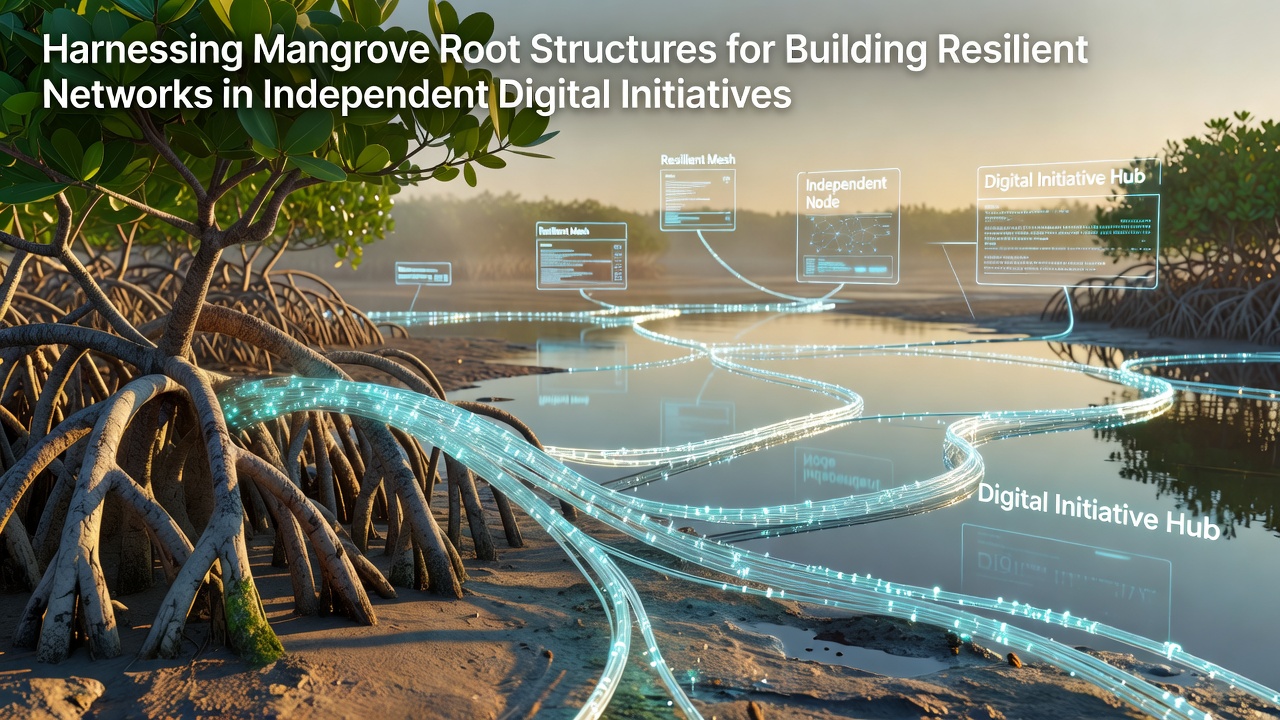
Harnessing Mangrove Root Structures for Building Resilient Networks in Independent Digital Initiatives
Researchers studying coastal ecosystems have documented how mangrove root networks distribute structural loads across multiple anchor points while maintaining flexibility during tidal surges and storm events. These biological systems create redundant pathways that allow the overall structure to withstand localized damage without systemic failure. Observers note similar patterns emerging in digital infrastructure projects where independent operators design connection protocols modeled on these natural configurations.
Root Architecture and Load Distribution Patterns
Mangrove species such as Rhizophora and Avicennia develop prop roots and pneumatophores that branch extensively both above and below the sediment surface. Studies conducted by coastal research teams show that individual roots rarely exceed a certain diameter yet their collective surface area provides stability across shifting substrates. Data collected from monitoring stations in Southeast Asia and the Caribbean indicate that root density increases in areas exposed to higher wave energy while remaining sparser in protected zones. This adaptive allocation of growth resources offers a template for digital networks that allocate bandwidth and storage capacity based on traffic patterns rather than uniform distribution.
Biomimetic Approaches in Decentralized Systems
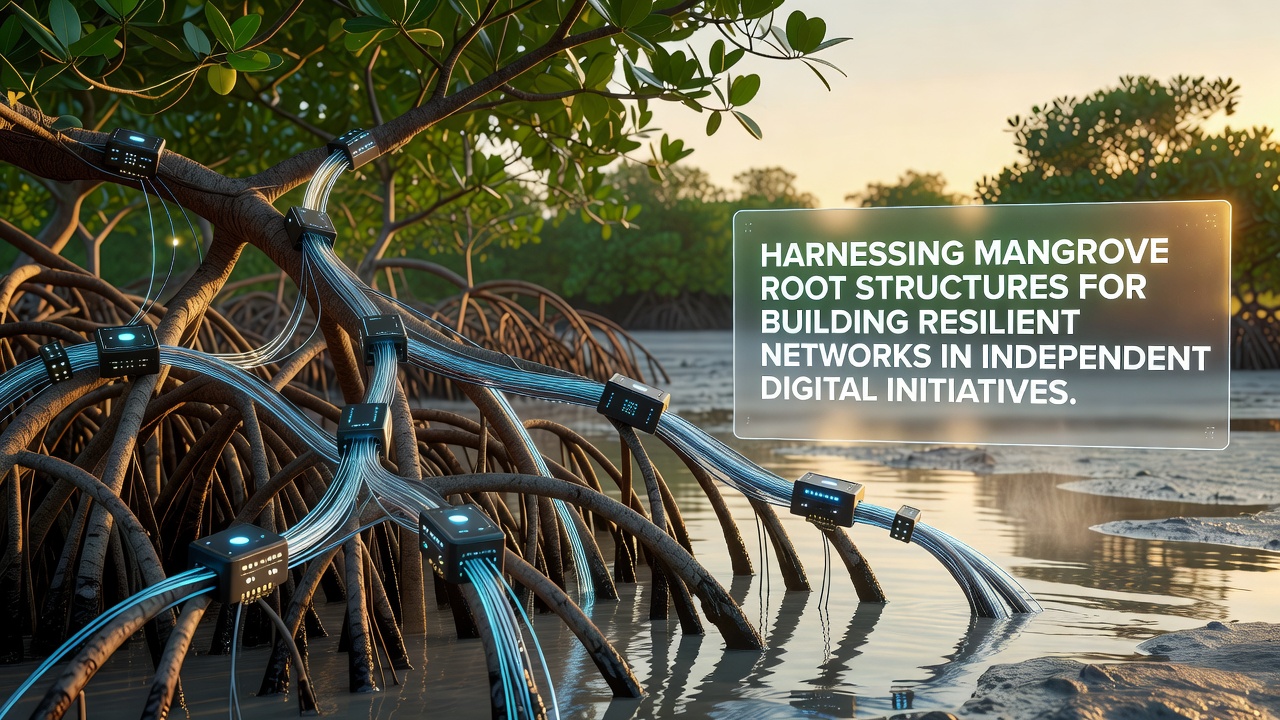
Independent digital initiatives have begun incorporating principles derived from mangrove root morphology into peer-to-peer connection frameworks. Instead of relying on centralized servers that function as single points of failure, these projects route data through multiple overlapping pathways that mirror the redundant anchoring provided by prop roots. Network architects examine how mangroves filter saline water at the root level and apply analogous filtering mechanisms to manage data packets at edge nodes. Reports published in October 2026 from monitoring programs tracking autonomous web projects record measurable improvements in uptime when connection topologies incorporate these branching patterns.
Implementation in Autonomous Web Projects
Teams operating self-hosted platforms have mapped mangrove root branching algorithms onto their routing tables. One documented case involved a collective managing regional news archives that reconfigured its node connections after analyzing sediment core samples showing root layering patterns. The revised topology distributed query loads across secondary and tertiary pathways during peak access periods. Figures released by the Australian Institute of Marine Science reveal that similar structural redundancy in natural systems correlates with survival rates exceeding 85 percent following major weather events. Digital operators report parallel resilience when traffic spikes occur without central coordination.
Environmental Data Integration and Network Modeling
Environmental agencies including the U.S. National Oceanic and Atmospheric Administration maintain datasets that track root system responses to salinity changes and sediment accretion rates. Independent initiatives access these records to calibrate simulation models used for testing network behavior under stress conditions. Parameters such as root density per square meter translate into metrics for node density per geographic region. The European Environment Agency has compiled comparative studies across Mediterranean and Atlantic sites that quantify how root connectivity influences overall ecosystem stability. Network designers reference these measurements when determining minimum connection thresholds required to maintain functionality during partial outages.
Observed Outcomes in Field Deployments
Projects that adopted mangrove-inspired topologies documented reduced latency in cross-regional data exchange compared with linear chain configurations. Participants in a Canadian research consortium tracked performance across 14 autonomous sites over an 18-month period and recorded fewer complete service interruptions after implementing branching protocols. The models treat each digital node as equivalent to a root segment that can transfer load to adjacent segments when primary routes become saturated. This approach aligns with observations from field biologists who documented how mangroves reroute nutrient transport following localized root damage.
Conclusion
Coastal monitoring programs continue to generate detailed measurements of mangrove root interactions that inform ongoing refinements in digital network design. Independent operators integrate these biological parameters into connection algorithms while maintaining separation between ecological observation and technical application. Data from multiple geographic regions support the utility of redundant branching structures for maintaining operational continuity under variable conditions. Continued collection of both environmental and network performance metrics provides the factual basis for further adaptation of these structural principles.